High-performance teams aren’t just groups of talented people. They’re small systems that adapt fast and learn faster, thus delivering consistent results. They share clear goals, communicate openly, make decisions with intent, and hold each other to a high bar.
However, many leaders miss what matters most: questions. Not the performative kind, but the ones that draw out clarity and lead to real commitments.
High-performance teams create space for questions that surface different perspectives and turn discussion into action. When people feel safe raising concerns and know who owns the next step, collaboration gets more focused and accountable.
This page covers the foundations of a high-performance team. Read on to learn how to build one and what questions to ask for alignment and collaboration.
Table of Contents
- The Foundations of a High-Performance Team
- How To Build a High-Performance Team
- Strategic Questions To Enhance Team Collaboration
- Final Note
- Frequently Asked Questions (FAQs)
The Foundations of a High-Performance Team
High-performance teams share a few essentials: goals, roles, decision rights, and ways of working. People speak up early and often, and listen just as hard. Teammates believe in each other’s intent and competence. Timelines and quality standards are explicit.
Research backs this up: Google’s Project Aristotle found: psychological safety is the single biggest predictor of team effectiveness. It’s when people feel safe taking risks and admitting mistakes. The other factors that mattered are as follows:
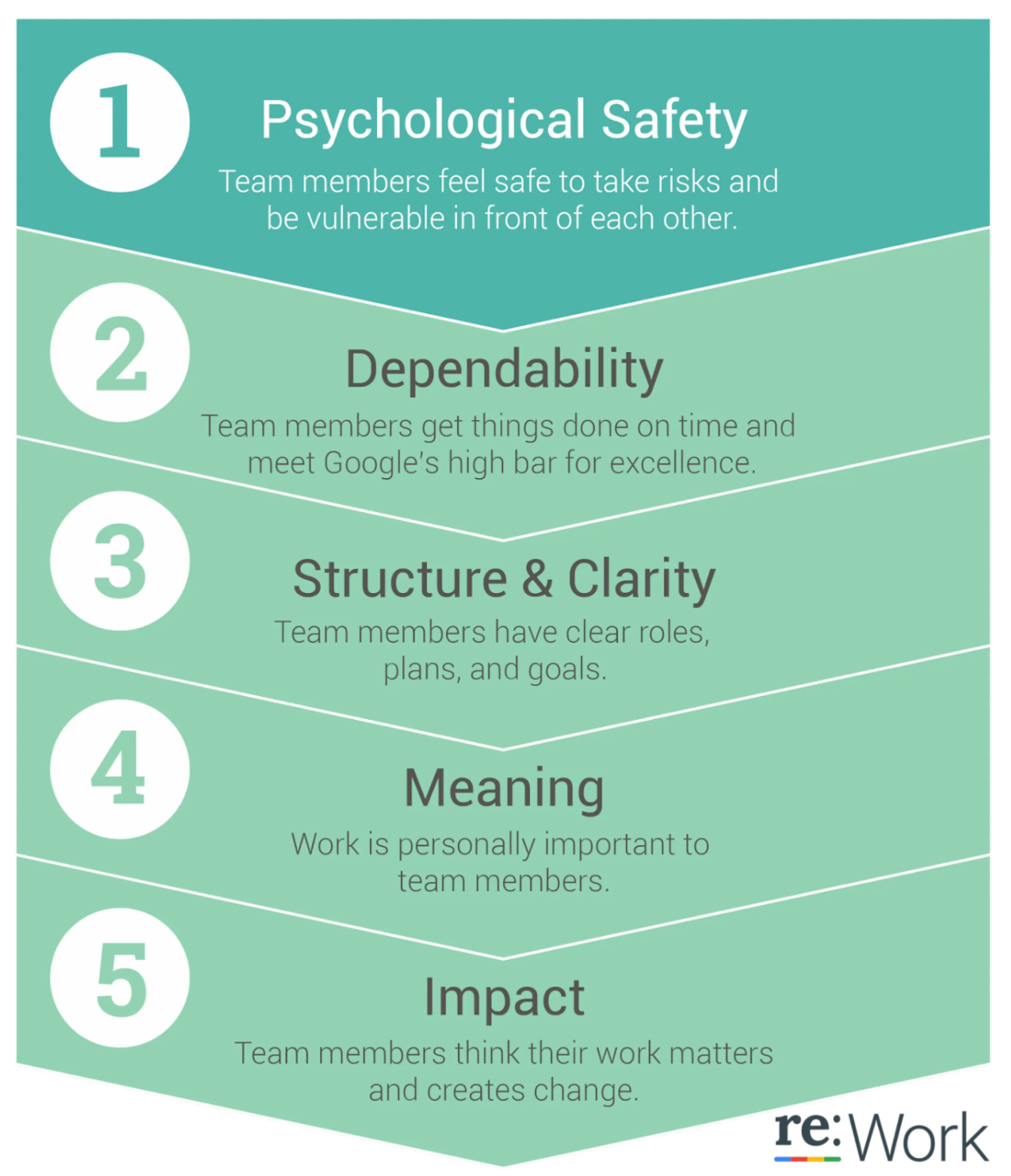
Leadership sets the tone. Leaders who model curiosity and make responsibilities obvious help teams move faster with less friction.
In the gemstone and precious stone industry, where attention to detail and quality are critical, strong communication and clear ownership can make a real difference. Tanyaporn Trirotanan, Vice President at Veerasak Gems, can attest to this. She highlights the importance of trust and communication when working toward a shared standard:
Trirotanan says, “When everyone understands their role and feels comfortable communicating openly, it becomes easier to maintain quality. It becomes much easier to solve problems quickly and work toward the same goal.”
That same principle applies to high-performance teams in any industry. When people know what they own and feel heard, they’re better equipped to collaborate and deliver consistent results.
Diversity matters, too. Teams that bring different perspectives to the table make better decisions and avoid blind spots. In fact, McKinsey’s research links diverse leadership teams with stronger financial performance.
How To Build a High-Performance Team
1. Identify weaknesses and areas for improvement
Before you can improve, you need a shared picture of where you are. A quick assessment doesn’t have to be fancy. However, it helps you create performance improvements for underperforming employees.
Try this: a short pulse survey, a 30-minute health check, or a focused retro. Then, look for patterns in three areas:
- Clarity: are goals, roles, and priorities obvious?
- Process: are meetings, decisions, and handoffs smooth or bumpy?
- Relationships: do people feel safe speaking up? Is feedback two-way?
A few helpful tools designed team effectiveness:
- Atlassian’s Team Health Monitor – a structured way to assess strengths and gaps across decision-making, velocity, and shared understanding
- Retrospectives – with simple prompts like: what should we start, stop, and continue to keep improvement rolling
- OKR check-ins – regularly review objectives, key results, and blockers to surface misalignment early
- Conversation mapping – note who speaks, who asks, who decides. If the same voices dominate, you’ve found a lever
Some diagnostic questions to uncover root issues:
- On a scale of 1–10, how clear are our top three priorities this quarter?
- Which decision in the last month took too long or too little time and why?
- Where do handoffs regularly stall?
- When did we last disagree productively, and what made it safe?
2. Aligning team goals and vision
Even strong teams drift if they don’t reconnect to a shared north star. Alignment turns scattered effort into momentum. OKRs (Objectives and Key Results) are a simple, transparent way to do this.
Try these alignment questions during quarterly planning or monthly reviews:
- What’s the one outcome this team must deliver this quarter?
- Which key results will prove we’re on track?
- How does each person’s work tie directly to the objective?
- What will we say no to to protect focus?
- Where do we have competing priorities, and how will we resolve them?
Everyone contributes to alignment. Invite each teammate to trace their tasks to the objective in plain language. If that link isn’t obvious, you’ve spotted either extra work or a goal that needs sharpening.
3. Enhance team accountability and ownership
Accountability isn’t about blame. It’s about clarity and commitment. Ownership grows when people help shape the plan and can see their impact.
Questions that create a culture of accountability for team effectiveness:
- What are we each committing to before our next check-in?
- What help or resources do you need to keep this on track?
- What early signal will tell us we’re slipping, and what’s our if/then plan?
- Where do we need to make ownership more explicit?
Make owners and due dates visible on a shared board. Close every meeting with a brief recap of decisions and assignments. Use lightweight RACI (“who decides what” guidelines) to avoid fuzzy roles. Keep commitments small and time-bound to encourage steady wins.
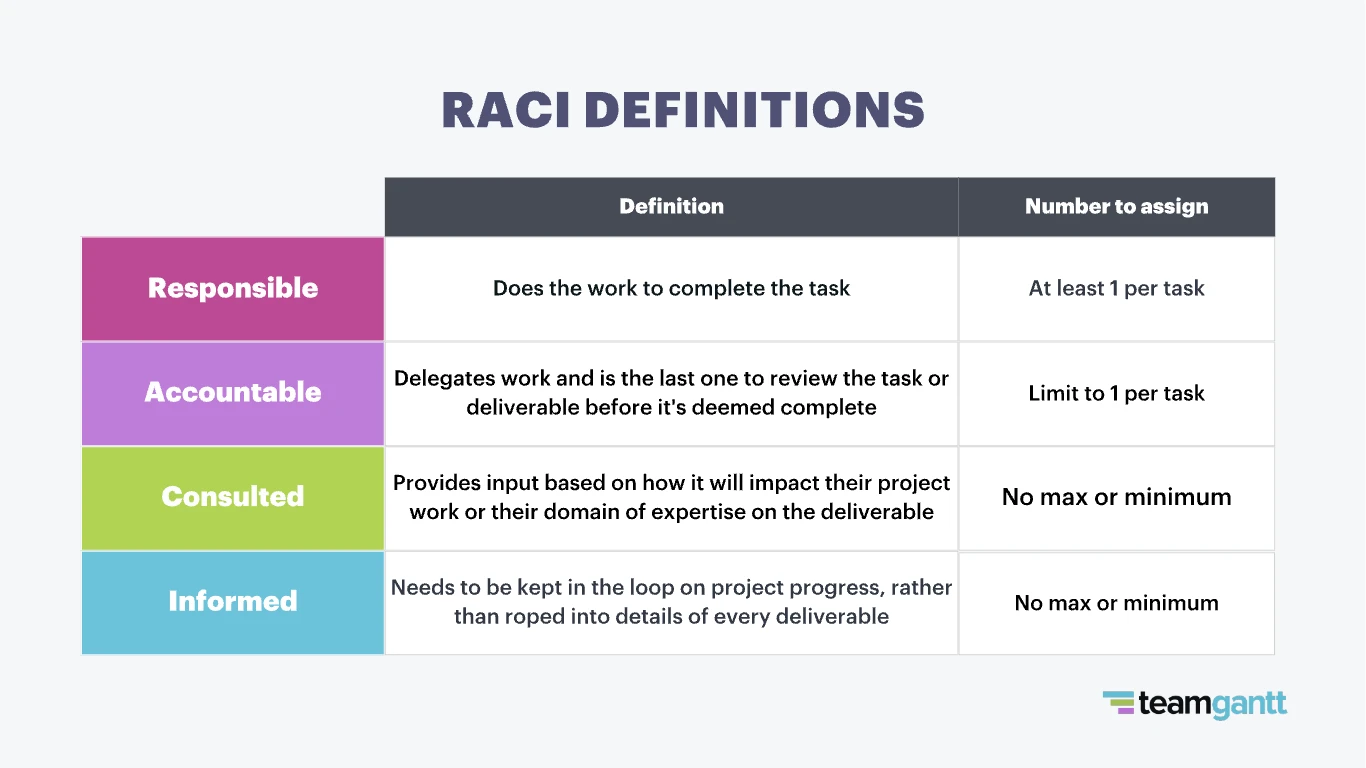
4. Build trust and psychological safety
People do their best thinking when they’re not bracing for impact. Psychological safety lets folks admit uncertainty and ask for help. It allows them to toss out half-formed ideas without fear. It’s not softness. It’s a performance driver.
Use questions that lower the social cost of speaking up for team effectiveness:
- What’s one concern you’re holding back right now?
- What did we learn this week from something that didn’t work?
- Where can I make it easier for you to disagree with me?
- What’s one small experiment we’re willing to try even if it might fail?
Reinforce safety with simple rituals. Quick personal check-ins to start meetings. Blameless post‑mortems. Explicit appreciation for dissent that improves the work.
5. Leverage diverse perspectives and skills
Physical or cognitive diversity fuels creativity and better decisions, but only when voices are truly heard. Inclusivity turns variety into value.
Questions that invite breadth team effectiveness:
- Whose perspective is missing from this conversation?
- What would our customer or frontline teammate say?
- How would a different function tackle this constraint?
- What’s an unconventional idea worth testing this week?
For structure, try silent brainwriting before discussion, 1‑2‑4‑All (think alone, then pairs, foursomes, then whole group), or a rotating devil’s advocate role.
When you do decide, capture the rationale in a decision log, so contrarian views are recorded and respected. Even if you move in a different direction.
Strategic Questions To Enhance Team Collaboration
You don’t need a new meeting to improve collaboration. You need the right questions to ask within the meetings you already have. Drop a handful of these into planning and/or meetings.
Crucial questions to ask based on what you want to achieve:
| Contextual Goals | Key Questions |
| For clarity and focus | What decision are we actually trying to make right now? What’s the minimum viable next step that moves this forward? What would success look like two weeks from now? |
| To surface assumptions and risks | What could make this plan wrong or incomplete? What’s the riskiest assumption we’re making? If this fails, what will have been the most likely reason? |
| For better debate | What’s the strongest argument against our current path? Who holds a different view, and what are we missing? If we had to pivot tomorrow, what’s our best alternative? |
| For decision clarity and ownership | Who is the final decision-maker, and by when? What are the top three actions and due dates? How will we know if this is working, and where will we track it? |
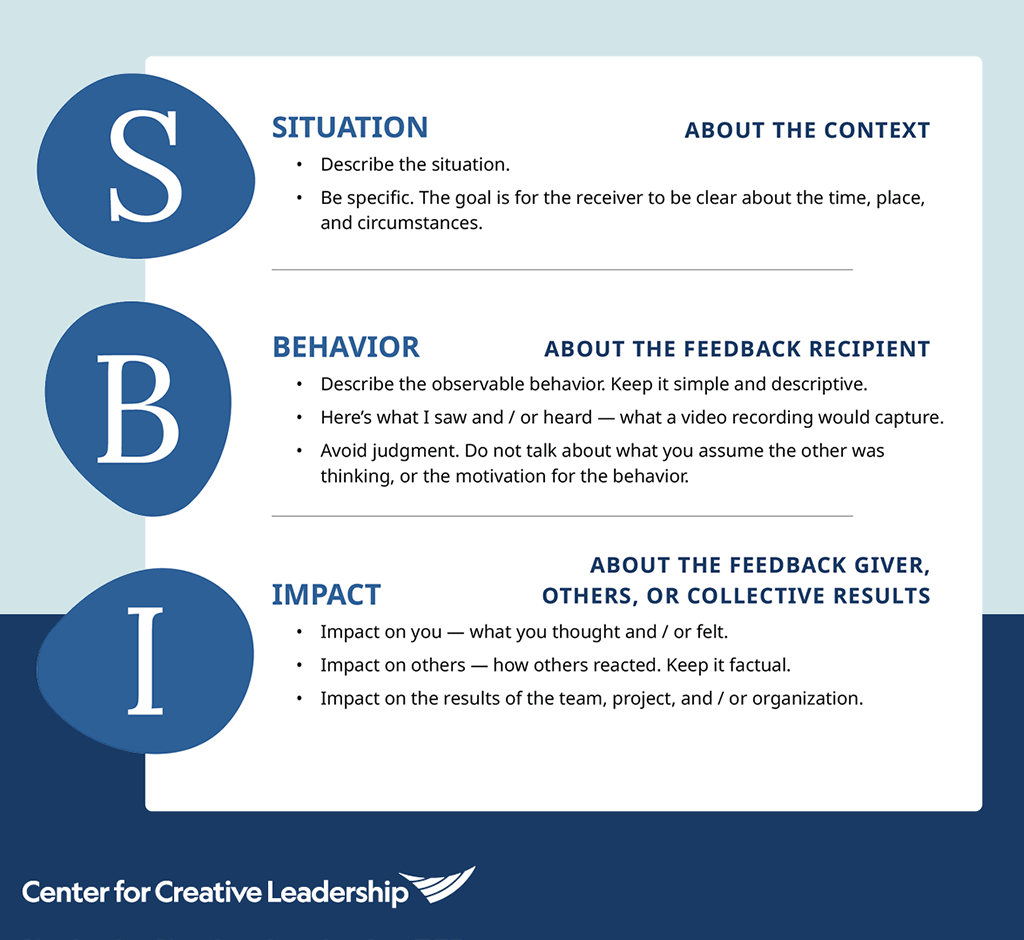
Pair these with active listening and crisp feedback. Keep turns short. Summarize what you heard. Ask follow-ups to confirm understanding. For feedback on behaviors, the Center for Creative Leadership’s SBI model (Situation–Behavior–Impact) keeps it specific and fair:
In fast-moving industries like home services, where teams often need to coordinate people and meet customer needs, clear communication can prevent small misunderstandings from becoming bigger problems.
Learn from Jesse White, General Manager at Balance Point Heating, Cooling & Plumbing. He emphasizes the value of clear communication and shared responsibility:
White explains, “When everyone understands what needs to happen, who owns it, and how their work affects the customer, the team can respond faster and work together more effectively.”
The same idea applies to any team. Good questions start the conversation, but active listening and clear ownership turn that conversation into action.
A quick checklist: what to do next
When teams ask better questions, they get better work: more clarity, stronger alignment, faster decisions, fewer surprises. The tools in this post aren’t complex. They’re small moments of curiosity and commitment, repeated.
A quick checklist you can use this month:
| Purpose | Steps To Take |
| Clarity | Write down your team’s top three priorities and how each role supports themAdd owner and due date to every decision |
| Collaboration | Add two assumption-busting questions to your next planning meetingUse a 10-minute Start/Stop/Continue at the end of your next sprint |
| Alignment | Draft one simple OKR and review it in weekly check-insCreate a decision log for big calls and share it |
| Accountability | Close meetings with a spoken recap of who’s doing what by whenSet one early warning signal for each key deliverable |
| Safety and inclusion | Start meetings with one sentence check-insAsk who hasn’t spoken yet and invite their view |
That said, pick one section, try two questions, see what shifts. Small changes compound quickly when a team makes them together.
Final Note
High-performance teams aren’t built overnight. They grow when people have clear goals, speak up, take ownership, and keep asking the questions that move the work forward.
That said, start with one or two changes, see what works, and build from there. Because when better questions lead the way, better teamwork usually follows.
Ready to help your team work better together? Outback Team Building offers team-building activities and facilitated sessions designed to improve communication, collaboration, engagement, and trust.
Frequently Asked Questions (FAQs)
1. What are the foundations of a high-performance team?
High-performance teams need clear goals, defined roles, strong communication, and shared accountability. They also need psychological safety so people feel comfortable speaking up and sharing different perspectives.
2. How do you build a high-performance team?
Start by identifying gaps in clarity, goals, processes, and relationships. Then align the team around shared objectives, clarify ownership, build trust, and create regular opportunities to ask questions and improve how the team works.
3. What questions can improve team alignment and collaboration?
Ask questions that clarify goals, surface risks, encourage different perspectives, and define ownership. For example: “What are we trying to achieve?” “What are we missing?” “Who owns the next step?”
Author Bio
Catherine Schwartz is a marketing & e-commerce specialist helping brands grow their revenue and take their businesses to new levels. Her work sits at the intersection of brand, content, and commerce. She translates big-picture strategy into the day-to-day decisions that actually compound: which audiences to reach, what story to tell, and how to make every channel pull its weight. She write about marketing, PR, technology, and team performance.