Getting to know you activities are games and shared experiences that help colleagues learn who they work with beyond their job titles. This guide covers 38 of them: 23 DIY ideas you can run on your own and 15 hosted activities our event facilitators run, each tagged for in-person, virtual, hybrid, or any setup.
Updated on: November 10, 2026
Most teams know what their colleagues do all day. Fewer know where those colleagues grew up, which song they’d add to the team playlist, or what they’d bring to show and tell.
That personal layer pays off at work. Gallup’s Why Work Friends Matter report found that employees with a best friend at work are seven times more likely to be engaged. Its meta-analysis of more than 180,000 teams also links more workplace friendships to 24% higher quality of work, 12% higher profitability, and 26% fewer safety incidents.
Friendships start with knowing each other, and our own data shows how much teams value that. Across the 1,506 events we ran in 2025, 57.3% of customers’ written feedback named team connection and collaboration.
We’ve split this list in two so it’s clear what you can run yourself and what we host. We don’t run the DIY ideas in the first section, and every activity carries a Best For tag so you can match it to how your team works. If you only need a five-minute warm-up for the start of a meeting, our guide to icebreaker activities for work has 23 of them.
Table of Contents
- 23 DIY Getting to Know You Activities
- 15 Hosted Getting to Know You Activities From Outback
- How To Choose The Right Activity
- Key Takeaways
- Frequently Asked Questions About Getting To Know You Activities
23 DIY Getting to Know You Activities

These 23 activities are free, need little or no prep, and you run them yourself. We don’t host them, so they’re a good fit when you want a quick, low-cost way for your team to learn more about each other.
1. Two Truths and a Lie
Best For: Any setup · Time: 15–20 minutes · Group Size: 4–20 people
Each person shares three statements about themselves: two true and one false. Everyone else guesses the lie, and the reveal usually starts a conversation about the true ones. In a hybrid meeting, have remote players post their guesses in the chat so every vote counts.
2. Unique and Shared
Best For: Any setup · Time: 20–30 minutes · Group Size: Small groups of 3–5
Split the team into small groups and give them 15 minutes to find three things they all have in common and one thing that’s unique to each person. Then bring everyone back together to share. The shared items show what connects the group, and the unique ones give people something to ask about later. On video, run it in breakout rooms.
3. Top Five
Best For: Any setup · Time: 10–20 minutes · Group Size: 4–15 people
Pick a category, such as movies, travel destinations, snacks, or day-off activities, and ask everyone to name their top five. Rankings start friendly debates fast, and you’ll find out who shares your taste in road-trip food. Run one category per meeting to keep it going for weeks.
4. 21 Questions
Best For: In-person and virtual teams · Time: 20–30 minutes · Group Size: Small groups of 4–6
Split into small groups and let each group ask one person up to 21 questions before moving on to the next person. Questions can be light (“What’s your go-to karaoke song?”) or work-focused (“What’s the best project you’ve ever worked on?”). Set a short time limit per person so everyone gets a turn.
5. Would You Rather?

Best For: Any setup · Time: 5–15 minutes · Group Size: Any size
Give the group an either-or question and have everyone pick a side and explain why. The answers range from silly to revealing. Here are a few to start with:
- Would you rather spend a week in the forest or a night in a haunted house?
- Would you rather know the answer to every trivia question or the lyrics to every song?
- Would you rather travel the world for free for a year or have $50,000 to spend however you like?
- Would you rather go for a run or go for a hike?
For 230 more, browse our would you rather questions for work.
6. Icebreaker Questions
Best For: Any setup · Time: 5–10 minutes · Group Size: Any size
Open a meeting with one personal question and give everyone 30 seconds to answer. Over a month of meetings, those answers add up to a much fuller picture of your colleagues. Try questions like these:
- What would the title of your autobiography be?
- What’s something you’re proud of accomplishing outside of work?
- If you could live in any country, where would you live?
- What’s the weirdest food you’ve ever eaten?
- What’s the best advice anyone has ever given you?
Our list of 576 team building icebreaker questions has plenty more.
7. Never Have I Ever
Best For: In-person teams · Time: 15–30 minutes · Group Size: 5–20 people
Players take turns naming something they’ve never done, starting with “Never have I ever…” Anyone who has done it takes an action, which is a sip of their drink at a team happy hour. For a non-drinking version, players stand up, raise a hand, or spin their office chair instead, so everyone can join in. Keep prompts work-appropriate and let people pass.
8. Get to Know You Bingo
Best For: In-person and hybrid teams · Time: 20–30 minutes · Group Size: 10–50 people
Make bingo cards filled with traits, hobbies, and experiences, such as speaking three languages, having run a marathon, or owning a pet with a human name. Players mingle to find a colleague who matches each square and write that person’s name in it. The first player to complete a row wins. For hybrid groups, share the cards digitally and let people message each other to fill their squares.
9. Whose Story Is It?

Best For: Any setup · Time: 20–30 minutes · Group Size: 6–25 people
Ask everyone to submit a short, surprising story about themselves ahead of time. Read each one aloud and have the group guess who it belongs to. For remote or hybrid teams, collect the stories through a quick online form and read them on the call. You can also swap the stories for hidden talents or unusual skills.
10. Then and Now
Best For: Any setup · Time: 15–20 minutes · Group Size: 6–30 people
Collect a childhood photo from everyone before the meeting, then show the photos one at a time while the group guesses who’s who. Share a current photo after each reveal. The haircut history alone gets people laughing, and most people share the story behind their picture.
11. Guess Whose Fridge
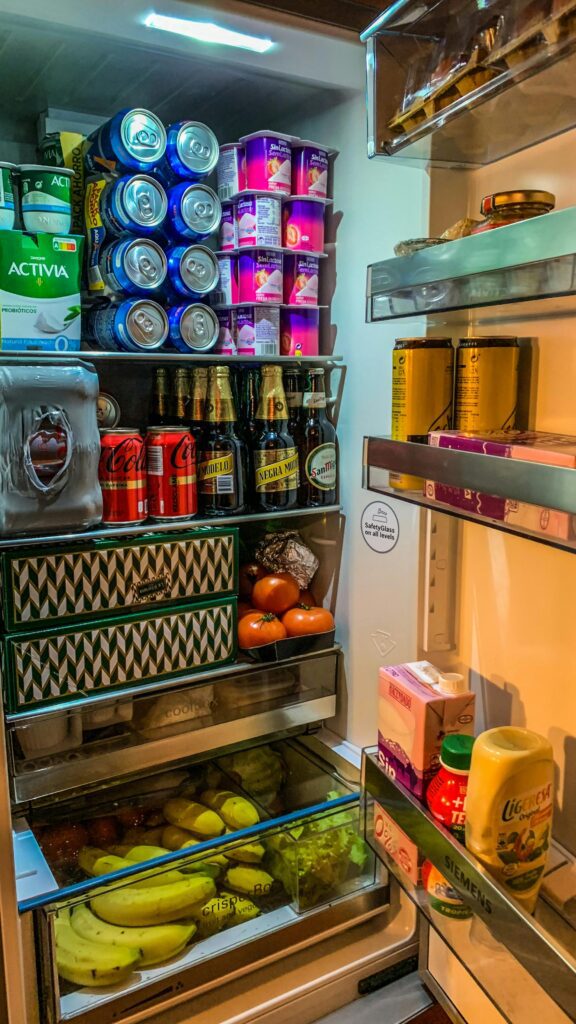
Best For: Virtual and hybrid teams · Time: 15–20 minutes · Group Size: 5–20 people
Everyone sends a photo of the inside of their fridge to the organizer, who shows the photos one by one while players guess the owner. Each correct guess earns a point, and the player with the most points wins. The condiment collections say more about people than you’d expect.
12. Guess Whose Workspace
Best For: Virtual and hybrid teams · Time: 15–20 minutes · Group Size: 5–20 people
Run it the same way as Guess Whose Fridge, using photos of everyone’s desk or home office instead. Remote workers usually set up their space in a way that’s personal to them, so the photos come with plenty of clues and stories. In-office colleagues can send a photo of their desk or a corner of home that represents them.
13. Show and Tell
Best For: Any setup · Time: 30–45 minutes · Group Size: 5–15 people
Pick a day and ask everyone to bring an object they’re proud of, interested in, or that represents them. Give each person two or three minutes to share why it matters. On video, remote colleagues get to show something from home, like a guitar, a garden, or a pet that wanders into frame.
14. Where I’m From
Best For: Any setup · Time: 15–30 minutes · Group Size: 5–40 people
Put up a large map and have each person place a pin where they grew up or where they live now, then share a detail or two about the place. For remote and hybrid teams, use a shared online map that everyone can drop a pin on during the call. The finished map gives new hires an easy way to find common ground.
15. Team Playlist
Best For: Hybrid and virtual teams · Time: 10 minutes to set up, then ongoing · Group Size: Any size
Start a shared playlist and ask everyone to add one song that means something to them, along with a sentence about why. Play a few songs at the start of meetings or let people listen on their own time. It suits hybrid teams well, since everyone can add to it from anywhere.
16. Working With Me Manual
Best For: Any setup · Time: 30 minutes to write, 5 minutes each to share · Group Size: Up to 15 people
Ask each person to write a one-page guide to working with them. It covers how they like to communicate, when they do their best work, what helps when they’re stressed, and one thing people tend to get wrong about them. Share the manuals in a team meeting or a shared folder. People keep referring back to them long after the activity, which makes this one especially useful for growing teams.
17. Personal Maps
Best For: In-person and virtual teams · Time: 20–30 minutes · Group Size: 4–12 people
Each person draws a quick mind map with their name in the middle and branches for family, hobbies, values, education, goals, and anything else they want to share. Then they walk the group through it. On video, a blank slide or an online whiteboard works well. Every branch gives someone a question to ask, so conversation follows on its own.
18. Journey Lines
Best For: In-person teams · Time: 45–60 minutes · Group Size: 4–10 people
Give everyone a sheet of paper and ask them to draw a line showing the highs and lows of their career, from their first job to today. Each person then talks the group through their line in three to five minutes. It’s a deeper activity, so it suits teams that already know each other a little and want to understand where everyone’s coming from. Let people choose how much they share.
19. Q&A Jenga
Best For: In-person teams · Time: 20–40 minutes · Group Size: 3–8 people per set
Write a question on each block of a Jenga set. Play as normal, and whenever someone pulls a block, they answer its question before placing it on top of the tower. Mix light questions with a few deeper ones, and keep a marker handy so players can write new ones as they go.
20. Kahoot! Team Quiz
Best For: Virtual and hybrid teams · Time: 15–20 minutes · Group Size: Any size
Build a quick quiz in Kahoot! using fun facts people submit about themselves, then have the team guess which colleague each fact belongs to. Players answer on their phones, so it works in a room, on video, or a mix of both, and the live leaderboard keeps it competitive.
21. Scavenger Hike
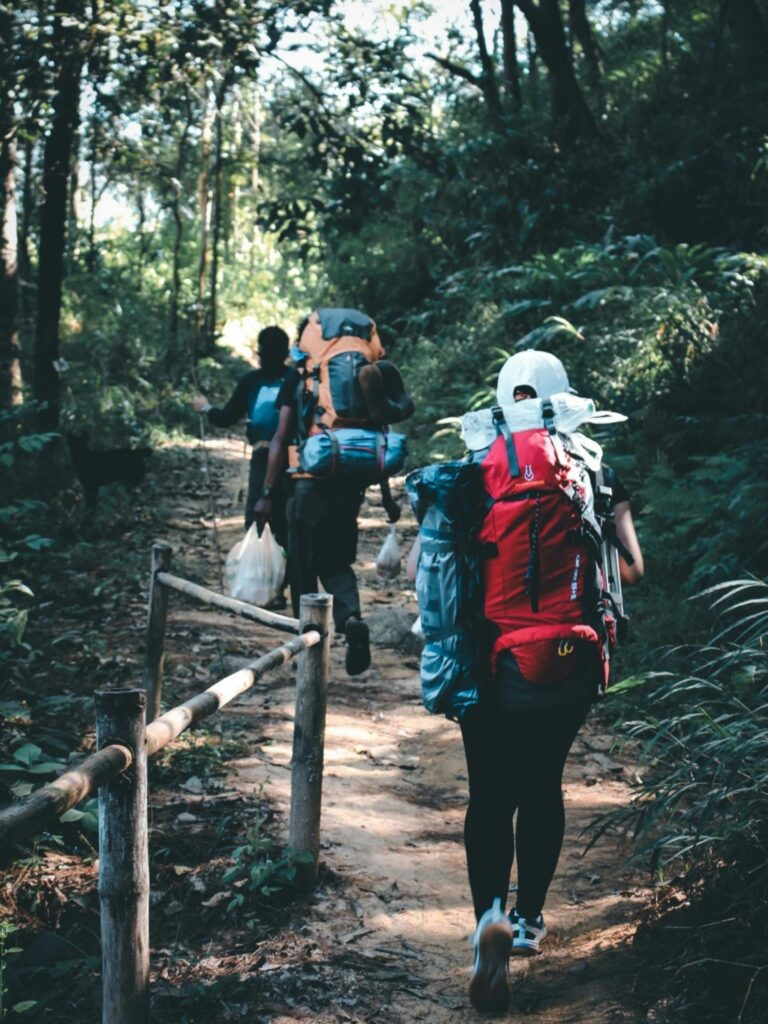
Best For: In-person teams · Time: 1–3 hours · Group Size: 6–30 people
Take the team on a day hike or nature walk and give each small group a list of things to photograph along the way, such as animal tracks, wildflowers, a trail marker, a rock formation, or a view worth sharing. Walking side by side for a few hours gives people plenty of time to talk, and the photo list gives every group a shared goal. Tailor the list to the trails near you.
22. Book Club
Best For: Any setup · Time: 45–60 minutes per meeting · Group Size: 4–12 people
Getting to know each other can be an ongoing habit as well as a one-time event. Start a book club where members take turns choosing a book and meet once a month to discuss it. People’s picks and opinions reveal a lot about them, and video calls make it easy for remote and hybrid members to join.
23. Donut on Slack
Best For: Hybrid and virtual teams · Time: Ongoing · Group Size: Any size
If your team uses Slack, Donut pairs colleagues who don’t know each other well and nudges them to meet for a virtual coffee or an in-person lunch. You can also use it for onboarding buddies, cross-department introductions, and mentorship pairings. It keeps new connections forming between bigger team events.
Most of these fit inside a regular meeting or lunch break, and the longer ones make a good centerpiece for a team social.
15 Hosted Getting to Know You Activities From Outback

When you want a bigger event, or you’d like to play along instead of running the clock, our event facilitators can host one of these 15 activities for you. Each one puts colleagues on small teams with a shared goal, which is one of the fastest ways to learn how people think, laugh, and work together. Specs come from each activity’s product page.
1. Team Pursuit

Best For: In-person and virtual teams · Formats: In person, virtual, or self-hosted · Group Size: 4–1,000+ · Duration: 1–3 hours
Team Pursuit was our most-booked activity in 2025, with 186 events. Teams race through mental, physical, skill, and mystery challenges for points, and many of the challenges ask players to discover things about each other to score. Here are a few examples:
- Air Band Geeks: Find at least three teammates who play or used to play an instrument and record a five-second video of them playing “air” versions of their instruments.
- Commonalities: Find your team’s most unique commonality, write a rap or rhyme of at least four lines about it, and record a teammate performing it.
- Juggling Responsibilities: Find the teammate who can juggle and record them keeping three or more objects in the air.
By the end, everyone knows who played trombone in high school and who can write a rap on deadline.
2. Wild Goose Chase

Best For: In-person teams · Formats: In person or self-hosted · Group Size: 10–5,000+ · Duration: 1–3 hours
Wild Goose Chase sends teams into the city with an app and a list of photo and video challenges, from balancing everyone on a seesaw to finding a clock that reads exactly 22 minutes past the hour. DemandJump used it to mix three departments that shared an office but rarely crossed paths. Afterward, colleagues started eating lunch together, and as one employee put it, “You can definitely tell that everyone has been a lot more comfortable with each other after the event.”
3. Friendly Feud
Best For: In-person and virtual teams · Formats: In person or virtual · Group Size: 4–1,000+ · Duration: 1–2 hours
Inspired by the classic TV game show, Friendly Feud has teams guess the most popular answers to survey questions. Guessing what most people said turns into a lesson in how your colleagues think, and because a host runs the game, the organizer gets to play too. accesso’s DEI Council used it to connect members across the US and the UK, and the group learned things about each other that carried into everyday work calls.
4. Charity Bike Buildathon
Best For: In-person teams · Formats: In person · Group Size: 25–2,000+ · Duration: 1–3 hours
In the Charity Bike Buildathon, teams get a budget to shop for bike parts and decorations, then race to build and personalize a bike for donation. Working side by side on something with your hands makes conversation easy. Kickstart Seed Fund chose it for an annual summit of 110 CEOs, and the build gave introverts and extroverts alike a natural reason to talk.
5. Trivia Time Machine
Best For: In-person and virtual teams · Formats: In person or virtual · Group Size: 4–1,000+ · Duration: 1–2 hours
Trivia Time Machine takes teams back through the decades of pop culture, with a professional actor hosting from the opening icebreaker to the final buzzer. Mixed-age teams have an edge, since everyone’s era comes up eventually, and the questions spark stories about where people were when a song or show was big.
6. Random Acts of Kindness
Best For: In-person teams · Formats: In person or self-hosted · Group Size: 4–10,000+ · Duration: 1–3 hours
In Random Acts of Kindness, teams compete to complete good deeds around the community, earning points for each one. Watching a colleague plan a surprise for a stranger shows a side of them that rarely comes up in a meeting, and the whole group gives back along the way.
7. Game Show Extravaganza
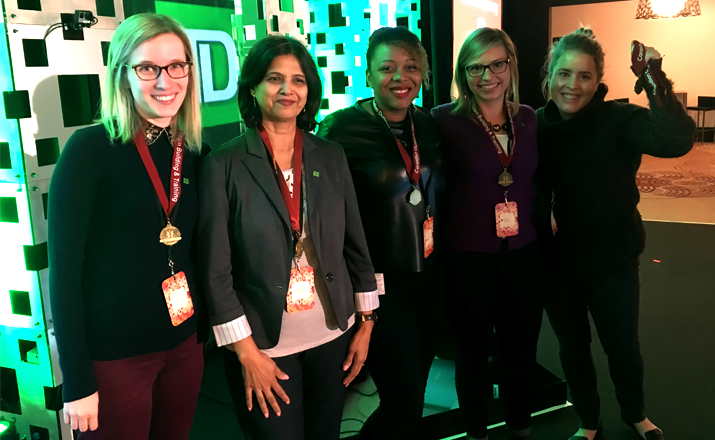
Best For: In-person and virtual teams · Formats: In person, virtual, or self-hosted · Group Size: 10–1,000+ · Duration: 2 hours
Nobody knows every trivia answer, but someone on your team probably knows the one you need. In Game Show Extravaganza, teams answer questions on pop culture, sports, history, and more, and figuring out who knows what becomes part of the strategy.
8. Picnic Party Games

Best For: In-person teams · Formats: In person or self-hosted · Group Size: 10–10,000+ · Duration: 1–3 hours
Picnic Party Games pairs a team picnic with a string of high-energy outdoor challenges. Teams, pairs, or individuals earn points for tasks like these:
- Balancing Act: One teammate lies on the ground with an uncapped water bottle on their forehead and tries to stand up without spilling.
- Brain Freeze: A teammate drinks a cold bottle of water fast enough to get a brain freeze while the team records it.
- Head Rush: Someone on the team holds an unassisted handstand or headstand long enough for a photo.
You can make it as competitive or as relaxed as your group likes.
9. Corporate Castaways

Best For: In-person teams · Formats: In person · Group Size: 25–2,000+ · Duration: 2–3 hours
Find out how your team would hold up stranded on a desert island, minus the danger. In Corporate Castaways, tribes take on Survivor-style physical and mental challenges, each worth points based on difficulty. Tribes choose which challenges to tackle and in what order, so you’ll see quickly who plans, who motivates, and who volunteers for everything.
10. Cardboard Boat Building Challenge

Best For: In-person teams · Formats: In person · Group Size: 25–2,000+ · Duration: 2–3 hours
In the Cardboard Boat Building Challenge, teams build working boats out of cardboard and tape, then put them in the water to see whose design floats. Planning a hull together shows how each person solves problems, and the launch gives everyone something to cheer about.
11. The Amazing Chase

Best For: In-person teams · Formats: In person · Group Size: 10–1,000+ · Duration: 2–5 hours
Inspired by the reality show The Amazing Race, The Amazing Chase has teams follow clues around their city and complete physical and mental challenges to unlock each new destination. PlentyOfFish has chosen it for its Whistler retreat four years running, and as one organizer put it, “It’s fast-paced, fun, and unlikely friendships always result.”
12. Jeoparty Social

Best For: In-person and virtual teams · Formats: In person or virtual · Group Size: 4–100 · Duration: 1–2 hours
Jeoparty Social puts your team on a Jeopardy-style game show with a buzzer and a professional actor as host. A social mixer challenge between each round gives everyone a chance to talk, which turns a trivia game into a getting to know you activity.
13. Virtual Social Shuffle

Best For: Virtual teams · Formats: Virtual · Group Size: 4–1,000+ · Duration: 1–2 hours
Built for remote groups, Virtual Social Shuffle moves colleagues through themed discussion topics and exploratory conversations in small groups, so people pick up fun facts about each other as they go. It’s a strong fit for distributed teams that seldom meet face to face.
14. Virtual Happy Hour Trivia

Best For: Virtual teams · Formats: Virtual · Group Size: 4–1,000+ · Duration: 1–2 hours
In Virtual Happy Hour Trivia, your team visits a virtual pub where the pub owner hosts two rounds of trivia across four categories you choose from 20 options. It gives a remote happy hour some structure, and the team rounds show who knows sports, who knows food, and who knows neither. For more ideas, see our virtual happy hour games for workgroups.
15. Virtual Beach Staycation

Best For: Virtual teams · Formats: Virtual · Group Size: 4–1,000+ · Duration: 1–2 hours
In Virtual Beach Staycation, the Captain welcomes your team aboard a virtually chartered yacht for a laid-back tropical getaway with travel-themed trivia. It’s a relaxed option for remote teams that want to unwind together.
Every hosted activity comes with a professional host who runs the event, so you can join in with everyone else.
How To Choose The Right Activity
Start with the moment you’re planning for and how your team works, then pick from the matching row. This table pairs common situations with a DIY option and a hosted option from the lists above.
| Situation | Best For | DIY Pick | Hosted Pick |
| Welcoming a new hire | Any setup | Working With Me Manual, Two Truths and a Lie | Virtual Social Shuffle |
| Connecting a remote team that rarely meets in person | Virtual teams | Guess Whose Workspace, Team Playlist | Virtual Social Shuffle, Virtual Happy Hour Trivia |
| Bringing together a hybrid team split between office and home | Hybrid teams | Kahoot! Team Quiz, Where I’m From with an online map | Friendly Feud, with the host joining by video |
| Mixing departments that rarely work together | In-person teams | Get to Know You Bingo, Unique and Shared | Wild Goose Chase, Team Pursuit |
| Going deeper with a team that already knows each other a little | In-person teams | Journey Lines, Personal Maps | Charity Bike Buildathon |
| Planning a retreat or offsite | In-person teams | Scavenger Hike, Never Have I Ever | The Amazing Chase, Corporate Castaways |
| Celebrating with a large group | In-person and virtual teams | Then and Now | Friendly Feud, Trivia Time Machine |
| Keeping connections going between events | Any setup | Book Club, Donut on Slack | A DIY option covers it |
If time or budget is tight, start with a DIY pick. When the group is large, spread across locations, or gathering for a milestone, a hosted activity takes the planning off your plate so you can join in.
Key Takeaways
If you only have a minute, here’s what to remember:
- Connection Pays Off: Gallup finds that employees with a best friend at work are seven times more likely to be engaged, and those friendships start with knowing each other.
- Match The Activity To Your Setup: Every activity in this guide carries a Best For tag, so you can pick one that works in a room, on video, or both.
- DIY Suits Everyday Moments: The 23 DIY ideas are free and fit inside a meeting, a lunch break, or an ongoing team habit.
- Hosted Suits Bigger Moments: The 15 hosted activities fit offsites, kickoffs, celebrations, and large or distributed groups, and they let the organizer play too.
- Sharing Stays Optional: The best getting to know you activities let people choose how much they share and pass when they want to.
Pick one for your next team meeting and build from there.
Frequently Asked Questions About Getting To Know You Activities
Here are answers to the questions we hear most from people planning getting to know you activities for their teams.
What Are Getting To Know You Activities?
Getting to know you activities are games and exercises that help colleagues learn about each other’s backgrounds, interests, and working styles. They range from 15-minute games like Two Truths and a Lie to hosted events like Team Pursuit, and they work for in-person, virtual, and hybrid teams.
What’s The Difference Between Getting To Know You Activities And Icebreakers?
Icebreakers are short warm-ups that ease people into a meeting or event. Getting to know you activities go a step further and focus on the people themselves, such as where they’re from, what they care about, and how they like to work. Many activities, like Two Truths and a Lie, work as both, and our guide to icebreaker activities for work covers the quicker options.
How Do You Run Getting To Know You Activities With A Hybrid Team?
Choose an activity everyone can join from their own device, such as a Kahoot! quiz, a shared online map, or a team playlist. Give remote colleagues a clear way to take part, like the chat or a shared doc, and ask someone in the room to watch for remote hands so everyone gets a turn.
What’s A Good Getting To Know You Activity For New Employees?
Low-pressure activities work best in a new hire’s first few weeks. Two Truths and a Lie and Where I’m From are easy entry points, and a Working With Me Manual helps a new hire learn how teammates like to work. For larger groups of new hires, Donut on Slack keeps introductions going after the first week.
How Do You Make Getting To Know You Activities Comfortable For Everyone?
Keep questions work-appropriate, let people pass, and avoid activities that require personal disclosure. Gallup’s research found that about one in 10 people prefer to keep personal and professional relationships separate, so include options like trivia or a team challenge, where people connect without sharing much about themselves.
Every activity on this list gives colleagues a reason to talk about something other than the next deadline. Start with one DIY idea at your next team meeting, and when you’re ready for something bigger, book a hosted activity so the whole team, including you, gets to play.
Want a hosted getting to know you activity for your team?
Get in touch with one of our Employee Engagement Consultants today.