Problem-solving is one of the most critical skills in any workplace. This list covers 33 team building problem solving activities organized by how you want to run them: fully facilitated experiences you can book through Outback, and DIY options your team can run without any outside support.
Updated: April 9, 2026
Problem-solving is the one skill every organization says it needs and very few actively develop. According to Payscale, 60% of managers report that new graduates entering the workforce lack adequate problem-solving ability, making it the most commonly cited soft skill gap.
The good news is that developing it does not have to look like a training seminar. The right activity makes practice feel like a game.
Team building problem solving activities are structured group exercises that challenge teams to work through real constraints, make decisions under pressure, and reach a shared goal together. They build the kind of collaborative thinking that pays off when real challenges hit at work.
This list covers 33 of our favorites.
Table of Contents
- Your Quick-Reference Guide to All 33 Activities in This Guide
- 16 Facilitated Team Building Problem Solving Activities
- DIY Team Building Problem Solving Activities
- Frequently Asked Questions
- What is a team building problem solving activity?
- How long do team building problem solving activities typically take?
- How many people do you need for a team building problem solving activity?
- Can team building problem solving activities be done virtually?
- What’s the difference between problem solving activities and other types of team building?
- What’s the difference between a facilitated activity and a DIY activity?
- What problem solving skills do these activities actually build?
Your Quick-Reference Guide to All 33 Activities in This Guide
First and foremost, let’s explain how we’ve broken up this guide. We’ve split all of the activities into two categories, so it is easy to find what fits your team’s situation”
- Facilitated team building activities: Fully facilitated experiences available through Outback. We handle everything: design, logistics, facilitation, and hosting. You just show up.
- DIY team building activities: Activities you plan and run yourself. We’ve included everything you need to pull each one off without outside help.
Not sure where to start? This table gives you a snapshot of every activity in the list so you can filter by format, setting, and what you’re trying to accomplish.
| Activity | Format | Setting | Best For | Time |
|---|---|---|---|---|
| Cardboard Boat Building Challenge | Facilitated | In-Person | Collaboration, creative thinking | 2-3 hrs |
| Clue Murder Mystery | Facilitated | In-Person | Analytical thinking, teamwork | 2-3 hrs |
| Corporate Escape Room | Facilitated | In-Person | Problem-solving under pressure | 1-2 hrs |
| Wild Goose Chase | Facilitated | In-Person (Outdoor) | Critical thinking, communication | 2 hrs |
| Domino Effect Challenge | Facilitated | In-Person | Systems thinking, cross-team coordination | 2-3 hrs |
| CI: The Crime Investigators | Facilitated | In-Person or Virtual | Analytical thinking, evidence-based decisions | 2-3 hrs |
| Team Pursuit | Facilitated | In-Person | Diverse strengths, collaboration | 2-3 hrs |
| Bridge Builders | Facilitated | In-Person | Cross-team coordination, communication | 2 hrs |
| Hollywood Murder Mystery | Facilitated | In-Person | Analytical thinking, creative problem-solving | 2-3 hrs |
| Code Break | Facilitated | In-Person | Mixed problem-solving, friendly competition | 1-2 hrs |
| Virtual Mummy’s Curse Escape Room | Facilitated | Virtual | Problem-solving under pressure | 1-2 hrs |
| Virtual Clue Murder Mystery | Facilitated | Virtual | Analytical thinking, teamwork | 2-3 hrs |
| Virtual Jewel Heist Escape Room | Facilitated | Virtual | Creative problem-solving, collaboration | 1-2 hrs |
| Virtual Code Break | Facilitated | Virtual | Adaptive thinking, friendly competition | 1-2 hrs |
| Virtual Trivia Time Machine | Facilitated | Virtual | Fun, engagement, friendly competition | 1-2 hrs |
| Virtual Jeoparty Social | Facilitated | Virtual | Connection, social engagement | 1-2 hrs |
| Egg Drop | DIY | In-Person | Decision-making under pressure | 45-60 min |
| Blindfold Build | DIY | In-Person | Communication, trust | 30-45 min |
| Marshmallow Spaghetti Tower | DIY | In-Person | Collaboration, creative thinking | 30-45 min |
| Resource Auction | DIY | In-Person | Strategy, negotiation, decision-making | 60-90 min |
| Lost at Sea | DIY | In-Person or Virtual | Decision-making, consensus-building | 45-60 min |
| Survival Scenario Remix | DIY | In-Person or Virtual | Decision-making under pressure | 45-60 min |
| Tower Trade | DIY | In-Person | Negotiation, strategy, adaptability | 60-90 min |
| Reverse Pyramid | DIY | In-Person | Creative thinking, adaptability | 20-30 min |
| Mystery Bag Challenge | DIY | In-Person | Creativity, resourcefulness | 45-60 min |
| The Silent Strategy Game | DIY | In-Person | Communication, trust | 30-45 min |
| Riddle Race | DIY | Virtual | Analytical thinking, speed, teamwork | 45-60 min |
| Virtual Blueprint Swap | DIY | Virtual | Communication, coordination | 45-60 min |
| Online Crisis Simulation | DIY | Virtual | Decision-making under pressure | 60-90 min |
| Collaborative Crossword | DIY | Virtual | Collaboration, communication | 45-60 min |
| Virtual Escape Grid | DIY | Virtual | Mixed problem-solving, competition | 45-60 min |
| Fact or Fiction? | DIY | Virtual | Critical thinking, fun | 30-45 min |
| Emoji Logic Challenge | DIY | Virtual | Creative thinking, fun | 30-45 min |
16 Facilitated Team Building Problem Solving Activities

When you book a facilitated activity through Outback, you’re not just getting an activity. You’re getting an experience that’s been designed, tested, and refined across thousands of events.
Our team manages the logistics, hosts the experience, and ensures the energy stays high from start to finish.
Of the 1,506 events we ran in 2025, these were our most-booked problem-solving experiences.
In-Person Facilitated Activities
Here are 10 in-person team building problem solving activities you can book through Outback.
1. Cardboard Boat Building Challenge
Your team has one mission: build a boat out of cardboard and tape that can actually float and cross water without sinking.
Teams split into groups and get to work, combining engineering thinking with creative instincts and real-time collaboration. Once the builds are done, each team presents their design and makes the case for why it’ll hold up. Then comes the race, and you find out who was right.
Few activities put collaborative problem-solving on the line quite like knowing you might end up in the water.
2. Clue Murder Mystery
A man named Neil Davidson is dead. Your team has to figure out who did it.
Clue Murder Mystery challenges groups to exercise their best analytical thinking, read the clues they’re given carefully, and work together to identify who had the means, motive, and opportunity to commit the crime. It’s one of our most consistently booked activities, with 127 events in 2025, and it delivers every time because the problem at the center of it is genuinely engaging.
Teams that can crack a murder case tend to do better at cracking everything else too.
3. Corporate Escape Room
Escape rooms work as team building because the only way out is solving the problem together. There’s no going it alone. There’s no waiting for someone else to figure it out. Every person has to contribute.
We bring the escape room to your office or venue, which means you don’t have to coordinate transportation, worry about capacity, or spend weeks planning the logistics. Your team walks in, the clock starts, and the only thing left to figure out is how to get out.
4. Wild Goose Chase
This app-based scavenger hunt sends teams out into the city with their smartphones and a list of challenges that require genuine creativity, quick thinking, and teamwork to complete.
Wild Goose Chase was one of our most-booked activities in 2025, with 124 events. It works because it gets people out of their heads and into the moment, which is exactly when real problem-solving instincts surface.
5. Domino Effect Challenge
In real workplaces, the most complex problems involve multiple teams working through their own piece of a challenge before it all has to come together as a cohesive solution. That’s exactly what this activity simulates.
Teams split up and work in parallel to build their own section of a massive chain reaction machine. Then they regroup, assemble the full machine, and hope everything connects the way it was supposed to. The on-the-fly problem solving required when it doesn’t is where the real learning happens.
6. CI: The Crime Investigators
Your group gets a crime, a set of evidence, and a clock. The only way to solve it is by approaching the problem analytically, examining the facts, and making decisions based on what the evidence actually shows.
CI is available in hosted, virtually hosted, and self-hosted formats, which makes it one of our most flexible options for groups that aren’t sure yet which delivery model fits best.
7. Team Pursuit
Team Pursuit was our most-booked activity in 2025, with 186 events and an average group size of 51.
Teams compete through a series of physical, mental, and skill-based challenges designed to surface hidden strengths, expose who leads naturally under pressure, and demonstrate what a group can actually accomplish when everyone’s contributing.
It’s energetic, competitive, and produces real insight about how your team operates.
8. Bridge Builders
Teams work in separate groups to design and build different sections of a bridge, without full visibility into what the other groups are building. When the time comes to assemble the full structure, those sections have to connect and hold.
The structural problem is straightforward. The collaboration challenge is not. Getting disconnected teams to produce something that actually works together takes real communication, shared assumptions, and a willingness to adapt on the fly.
9. Hollywood Murder Mystery
An up-and-coming actress has been found dead in her hotel room the night after a major awards show. The suspect list is long, the evidence is scattered, and your team of detectives has to piece it all together.
Groups work through police reports, coroner’s reports, photo evidence, tabloids, interrogations, and phone calls to figure out the motive, the method, and the murderer. Teams that tune out or go rogue tend to get the wrong answer.
10. Code Break
Using Outback’s custom app, teams split into small groups and race through a mix of puzzles, riddles, and trivia challenges. Every correct answer earns points. The team that has completed the most challenges when time runs out wins.
Code Break is fast-paced, competitive, and designed to reward both analytical and creative thinkers in equal measure. It’s also one of our most scalable options, running smoothly for groups anywhere from 20 to 500.
Virtual Facilitated Team Building Problem Solving Activities

Remote and hybrid teams deserve just as good an experience as in-person ones. These virtual team building activities are fully facilitated, professionally run, and built to keep distributed groups genuinely engaged from start to finish.
1. Virtual Escape Room: Mummy’s Curse
Your team gets transported into a cursed pyramid and has to uncover clues and solve a series of complex challenges to break the curse before time runs out.
The puzzles are legitimately tricky, the atmosphere is immersive, and the collaborative pressure is real even through a screen.
2. Virtual Clue Murder Mystery
The same murder. The same victim. The same analytical challenge. Delivered completely virtually.
Groups analyze clues, resolve challenges, and work together to figure out who killed Neil Davidson. The virtual format doesn’t dilute the experience. If anything, it adds a communication layer that makes the collaboration element even more interesting.
3. Virtual Escape Room: Jewel Heist
A priceless collection of jewels has been stolen, and your team has to recover them before the trail goes cold.
The clock is running, the challenges are brain-boggling, and the only path forward is creative problem-solving and outside-the-box thinking.
4. Virtual Code Break
Teams race through a rotating mix of brainteaser challenges, from Sudoku and riddles to trivia and pattern problems, with the challenge types shifting fast enough to keep everyone on their toes.
5. Virtual Trivia Time Machine
A fast-paced, nostalgia-fueled trivia game that takes teams on a trip through pop culture history, from the pre-pandemic 21st century all the way back to the 60s.
Our host kicks things off with a few mixer rounds to warm up the room, then the home offices become a game show stage complete with buzzers and full-on competition energy.
6. Virtual Jeoparty Social
A Jeopardy-style game show with a social twist built in. Between each round, players take part in a mixer challenge designed to get people talking and laughing, not just competing.
It’s the right option for remote teams that want to combine real friendly competition with the kind of connection that carries back into the work.
DIY Team Building Problem Solving Activities

You don’t need a vendor or a facilitator to run a great problem-solving activity. You just need a clear challenge, the right setup, and a group that’s ready to work.
These 17 activities can be planned and run entirely in-house. We’ve included everything you need to get started.
In-Person DIY Team Building Problem Solving Activities
Here are 10 in-person team building problem solving activities you can plan and run entirely on your own.
1. Egg Drop
The goal is simple. The execution is harder than it sounds. Teams have a fixed amount of time to build a contraption that will protect a raw egg from being dropped, using only the materials you provide. A common list:
- Newspapers
- Straws
- Tape
- Plastic wrap
- Balloons
- Rubber bands
- Popsicle sticks
- Cotton balls
- Feathers
Give your group 15 minutes to build, then test each design. If multiple eggs survive the first drop, increase the height and go again. The team with the last egg standing wins.
Not comfortable using eggs? Lightbulbs work just as well. The activity is about the decision-making under time pressure, not the materials.
2. Blindfold Build
One partner puts on a blindfold. The other becomes their eyes.
The challenge can be anything that requires physical coordination: stacking cups into a pyramid, arranging blocks in a specific pattern, or balancing objects in a line. The blindfolded person can only act on what their partner tells them. The guide has to be specific, calm, and clear.
Teams swap roles so everyone experiences both sides of the trust equation. It’s funny to watch, but it also surfaces how well people actually communicate when precision matters.
3. Marshmallow Spaghetti Tower
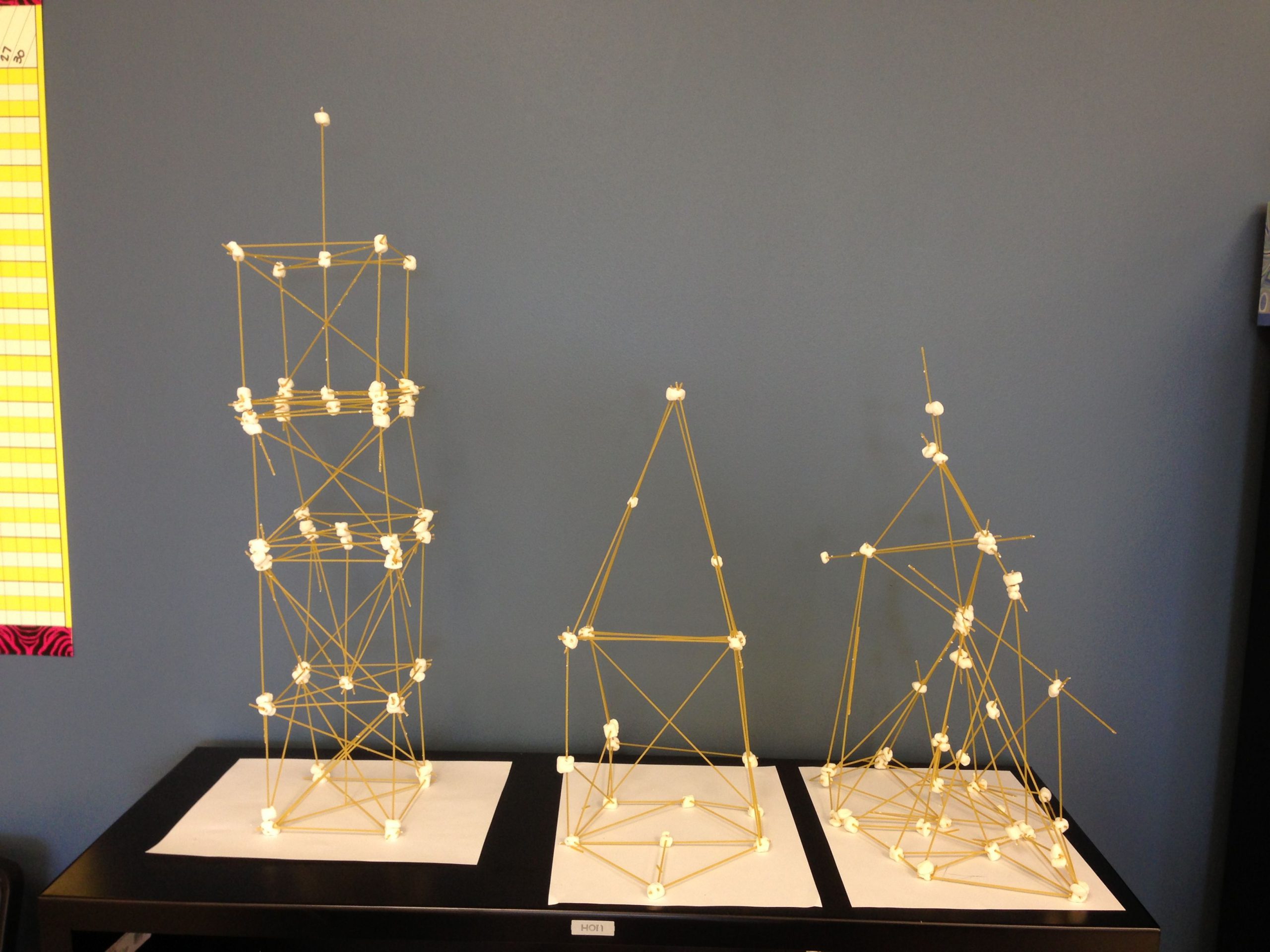
Teams use only marshmallows, uncooked spaghetti, tape, and string to build the tallest freestanding structure they can in 30 minutes. The catch: the tower has to be freestanding, and time runs out whether you’re ready or not.
For a harder version, require a marshmallow on top of the completed tower. Top-heavy structures tend to fall, and the scramble to stabilize them in the final minutes is where you learn the most about how a team operates under pressure.
4. Resource Auction
Teams start with a stack of play money and a blank agenda. The auctioneer introduces items rapidly, forcing fast bidding decisions. Duct tape goes for more than it has any right to. Someone blows half their budget early on something that turns out to be useless.
Once the auction closes, teams get a challenge and have to build a solution using only what they bought. It’s a resource allocation and decision-making exercise disguised as a bidding war, and it tends to spark some of the best post-activity conversation of anything on this list.
5. Lost at Sea
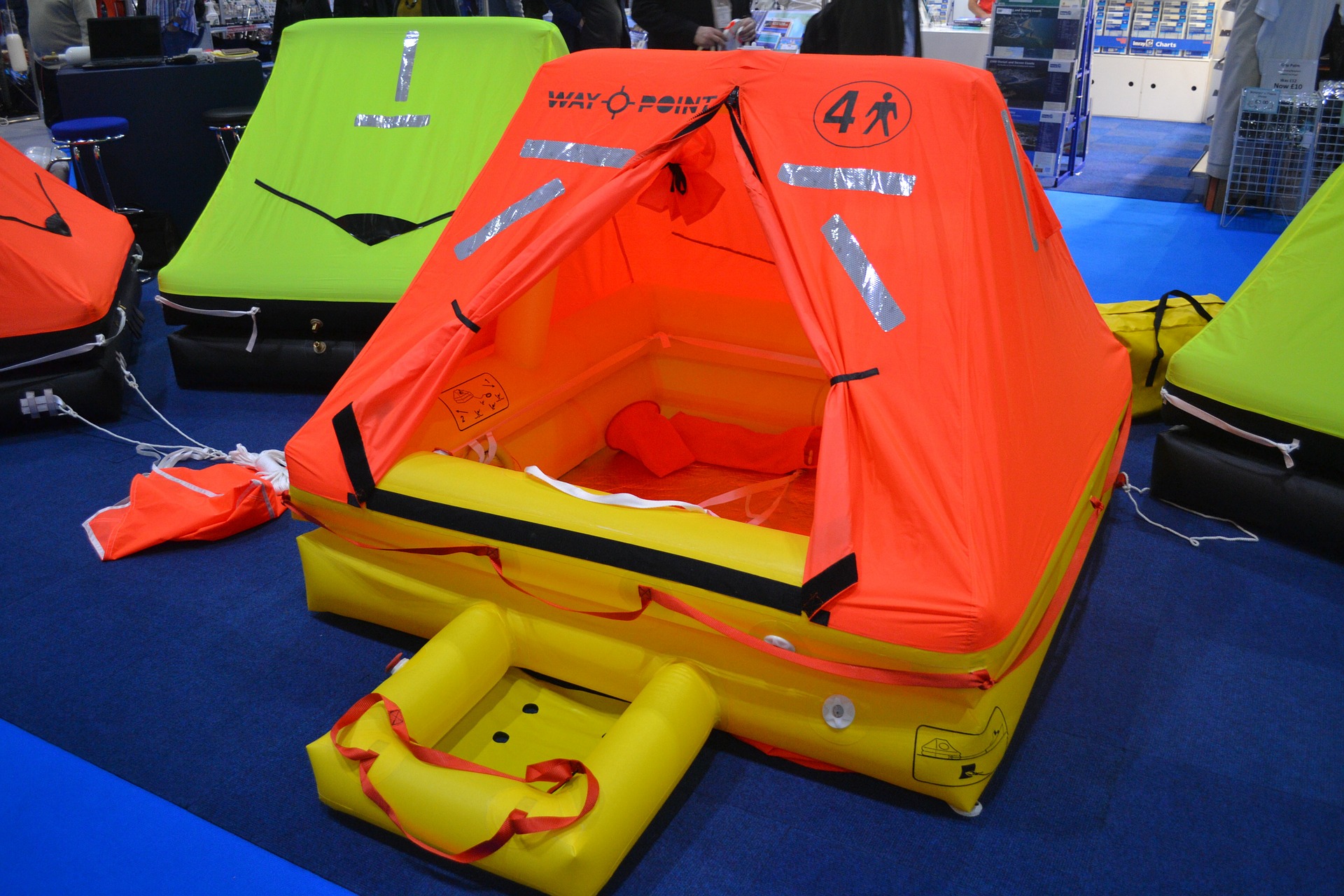
Your team is stranded in a lifeboat in the open ocean. You have 14 items. You need to rank them in order of survival importance.
Each participant gets a chart with six columns. The first lists the items. The second is for individual rankings. The third is for the group’s consensus. The fourth reveals the correct order per the US Coast Guard. The fifth and sixth track the gap between individual and group scores versus the expert answer.
The 14 items, in correct order of importance:
- A shaving mirror (can signal passing ships using reflected sunlight)
- A can of gas (can be lit and floated to signal for help)
- A water container (for collecting rainwater)
- Emergency food rations
- A plastic sheet (shelter and rainwater collection)
- Chocolate bars
- Fishing rods
- Rope
- A floating seat cushion (doubles as a life preserver)
- Shark repellant
- A bottle of rum (useful for cleaning wounds)
- A radio (helpful, but likely out of range)
- A sea chart (useless without navigation equipment)
- A mosquito net
Give individuals 10 minutes to rank solo. Then give the full group 10 minutes to reach consensus together. Reveal the correct order and compare results. The goal isn’t to get the right answer. It’s for everyone to be heard and for the team to make a decision together under pressure.
This activity works just as well virtually. Use breakout rooms for small group discussion, then bring everyone together for the reveal.
6. Survival Scenario Remix
Same structure as Lost at Sea. Different scenario entirely.
Your team is stranded on Mars with a failing oxygen supply. Or trapped in a snowstorm with half the gear they need. Or adrift in the Pacific with a completely different set of survival items.
The new setting changes the conversation completely. The debates get louder. The gap between individual instincts and group consensus tends to be wider. And the expert reveal at the end is almost always surprising.
Run this as a standalone activity or use it as a sequel for a group that’s already done Lost at Sea and wants to go again with a fresh challenge.
7. Tower Trade
Each team starts with some of the supplies they need and none of the others. To build the tallest freestanding tower possible, they’ll have to negotiate with other groups.
Teams draft blueprints first, quickly realizing which materials they’re missing. Then the trading starts. Some groups bluff. Some make smart deals early. Others overbid and are left scrambling.
Once trading closes, teams race to build. The real outcome isn’t who builds the tallest. It’s watching how teams behave when they don’t hold all the cards.
8. Reverse Pyramid
Break your group into small teams and form a pyramid shape. The challenge: flip the base and the peak using only three moves.
For a physical version using cups, start with one cup face down at the top. Build down by lifting the bottom row each time and sliding a new row underneath. Only one person can do the lifting. Everyone else has to work fast enough to place the new row before the structure loses balance. 36 cups. 20 to 30 minutes. If it falls, start over.
It sounds simple, and it isn’t. Most groups fail at least once before they find the rhythm.
9. Mystery Bag Challenge
Each team gets a bag of random supplies: balloons, straws, rubber bands, tape, popsicle sticks, whatever you decide to throw in. Their mission is to solve a specific physical challenge using only what they’ve got.
Teams have to assess what they have, figure out what’s useful, and design a solution from scratch. Prototypes fail. Ideas get scrapped. Better ideas replace them. And the final test is always worth watching.
10. The Silent Strategy Game
Remove speaking from the equation and watch what happens.
Teams have to solve a logic or building challenge without saying a single word. Gestures, written notes, and expressions only.
By the time the silence lifts, most groups are laughing and immediately recapping what they thought they were communicating versus what was actually received. The debrief on this one tends to be more honest than almost any other activity on this list.
Virtual DIY Team Building Problem Solving Activities
Remote teams can run every one of these activities entirely online, using video conferencing, shared documents, and virtual whiteboards. No special software required.
1. Riddle Race
Breakout groups receive a chain of riddles and logic puzzles that get harder with every round. Solving each one unlocks the next. The race is on to be the first team back with all the correct answers.
Hint tokens are available, but using one adds time to the final score. The energy is competitive and fast-moving, and the team that wins tends to be loud about it.
2. Virtual Blueprint Swap
Two breakout groups each receive half the instructions for building a simple object from household materials. Neither group can finish without the other’s piece of the puzzle.
Teams have to shuttle information back and forth while simultaneously making progress on their own build. Teams that communicate well finish faster. Teams that assume they understood correctly tend to discover they didn’t when the builds are revealed at the end.
It’s a communication exercise wrapped inside a building challenge, and it always exposes more than teams expect.
3. Online Crisis Simulation
Drop your team into a high-stakes scenario with no script and a ticking clock.
One moment they’re a PR team with five minutes before a scandal goes public. The next, they’re astronauts rationing oxygen on a failing Mars mission. Once the simulation ends, teams present and defend their decisions to the full group.
The debrief is where the real value lands. The choices teams made under pressure, the logic they used to justify them, and the moments where the group fractured or held together all become conversation worth having.
4. Collaborative Crossword
One crossword. Multiple breakout groups. Each group gets a section to solve, but the answers only work if they line up correctly across groups.
Teams solve as much as they can independently, then come back together to compare notes and negotiate what fits where. No single group can finish without the others. That’s the whole point.
5. Virtual Escape Grid
Build a grid in Google Sheets, Slides, or a virtual whiteboard and assign each square a challenge. Teams start at one end and have to solve their way to the finish. Correct answers move them forward. Wrong answers send them back.
The tension builds naturally as the clock runs down and teams start making riskier moves to get ahead.
6. Fact or Fiction?
Teams get a list of claims. Some are true. Some are convincing lies. They have to figure out which is which before time runs out. A few examples to get you started:
- Sharks existed before trees
- Bananas grow on bushes
- Octopuses have three hearts
- Napoleon was taller than the average Frenchman of his era
- Goldfish only have a three-second memory
- The Eiffel Tower grows more than six inches taller in summer heat
Every round produces confident, completely wrong answers and the kind of laughter that comes from realizing you were absolutely certain about something that wasn’t true.
7. Emoji Logic Challenge
Strings of emojis. Problems to solve. Teams decode each combination: a movie title, a common phrase, a math equation, or an idiom. It moves fast, it’s harder than it looks, and it’s a lot more fun to watch than a standard trivia round.
Some examples:
- 🎬🧑🚀🌕 = Apollo 13
- 🦈🌊🚤 = Jaws
- ❄️👸🏻⛄️ = Frozen
- 👀🍎 = An apple a day keeps the doctor away
- 🔥🚒🐈 = Rescue a cat from a fire
- 🧮➕➖✖️➗ = Do the math
The mix of creative thinking, competitive energy, and ridiculous wrong guesses makes this one of the most reliably entertaining options on this list.
The right team building problem solving activity depends on your group size, your format, and how much you want to take on yourself. But the most important variable isn’t any of those things. It’s whether the activity actually creates the conditions for your team to think, collaborate, and work through something real together.
The best ones make that feel like the opposite of work.
Have a favorite team building problem solving activity that didn’t make this list? Tell us about it in the comments.
Frequently Asked Questions
We get a lot of questions about team building problem solving activities, from how to pick the right one to how long they should run and whether they actually work for remote teams. Here are the answers to the ones we hear most often.
What is a team building problem solving activity?
A team building problem solving activity is a structured group exercise designed to challenge participants to work together under real constraints, make decisions with limited information, and find creative solutions to a shared problem. Unlike casual team bonding, these activities have a defined goal and are intentionally designed to build skills that carry back into everyday work.
How long do team building problem solving activities typically take?
It depends on the activity and format. Shorter DIY activities like Blindfold Build or Emoji Logic Challenge can run in 20 to 30 minutes. Facilitated experiences like Clue Murder Mystery or Team Pursuit typically run two to three hours. Most groups find that 60 to 90 minutes is enough time for a meaningful experience without losing energy or focus.
How many people do you need for a team building problem solving activity?
Most of the activities on this list work for groups of any size. Smaller activities like Lost at Sea work best with five to 30 participants. Larger facilitated activities like Wild Goose Chase or Team Pursuit can accommodate groups of 500 or more. The quick-reference table at the top of this article includes recommended group sizes for all 33 activities.
Can team building problem solving activities be done virtually?
Yes. Thirteen of the 33 activities on this list are designed specifically for virtual teams, including both facilitated options like Virtual Clue Murder Mystery and DIY options like Online Crisis Simulation and Collaborative Crossword. Several of the in-person DIY activities, including Lost at Sea and Survival Scenario Remix, also adapt well to a video conferencing format using breakout rooms.
What’s the difference between problem solving activities and other types of team building?
Problem solving activities are one category within the broader world of team building. Other types focus on trust, communication, creative thinking, or social connection. Problem solving activities are designed to put groups under real constraints and challenge them to work through something together. The skills they build transfer directly back to everyday work.
What’s the difference between a facilitated activity and a DIY activity?
A facilitated activity is a fully facilitated experience you book through Outback. We handle the design, logistics, and facilitation. A DIY activity is one you plan and run entirely in-house. Facilitated activities tend to produce more consistent results because the experience has been refined across thousands of events, but DIY activities are more accessible and can be run anytime with minimal lead time.
What problem solving skills do these activities actually build?
Depending on the activity, participants practice decision-making under pressure, analytical thinking, creative problem-solving, communication under constraint, resource allocation, and collaborative planning. The most effective activities build more than one of these at a time and create enough genuine challenge that participants have to rely on each other to succeed.
Want to host your own team building problem solving activity?
Get in touch with our Employee Engagement Consultants if you’d like to learn more about any of our suite of team building activities.