Every team has its own rhythm. When roles are clear, that rhythm feels steady and energizing. When they’re fuzzy, work stalls and tempers flare. Even small tasks eat everyone’s time. Clear roles help people feel proud of what they own and how they contribute.
Well-defined roles lift productivity. Why? Because people know where to focus and when to involve others. They lift morale. Because expectations are fair and transparent. And at the center of it all is accountability.
It isn’t about finger-pointing. It’s about trust. It’s the comfort of knowing who’s got what and how you’ll know when it’s done. So, continue reading to learn how to define team roles, including how to set responsibility and accountability.
Table of Contents
- Why Defining Team Roles Is Important
- Key Methods for Defining Roles and Building Accountability
- Challenges in Establishing Team Roles and Accountability
- Case Study: Effective Team Role Definition at Outback Team Building
- Final Note
- Frequently Asked Questions (FAQs)
- Author Bio
Why Defining Team Roles Is Important
Defining team roles is crucial in businesses and organizations across all industries. It requires two key aspects: setting clear responsibilities and creating a culture of accountability among team members.
Defined roles translate to team effectiveness. They help teams stay focused on priorities and reduce overlap. When two people believe they’re responsible for the same thing, they both hesitate. Or both jump. Either way, you lose time.
Role clarity trims that confusion. It also makes work feel more meaningful. People can finally see how their piece connects to the bigger picture.
Meanwhile, accountability gets simpler when responsibilities are clear. You can have honest, useful conversations about progress and blockers. Why? Because it’s obvious who owns what and what “done” looks like.
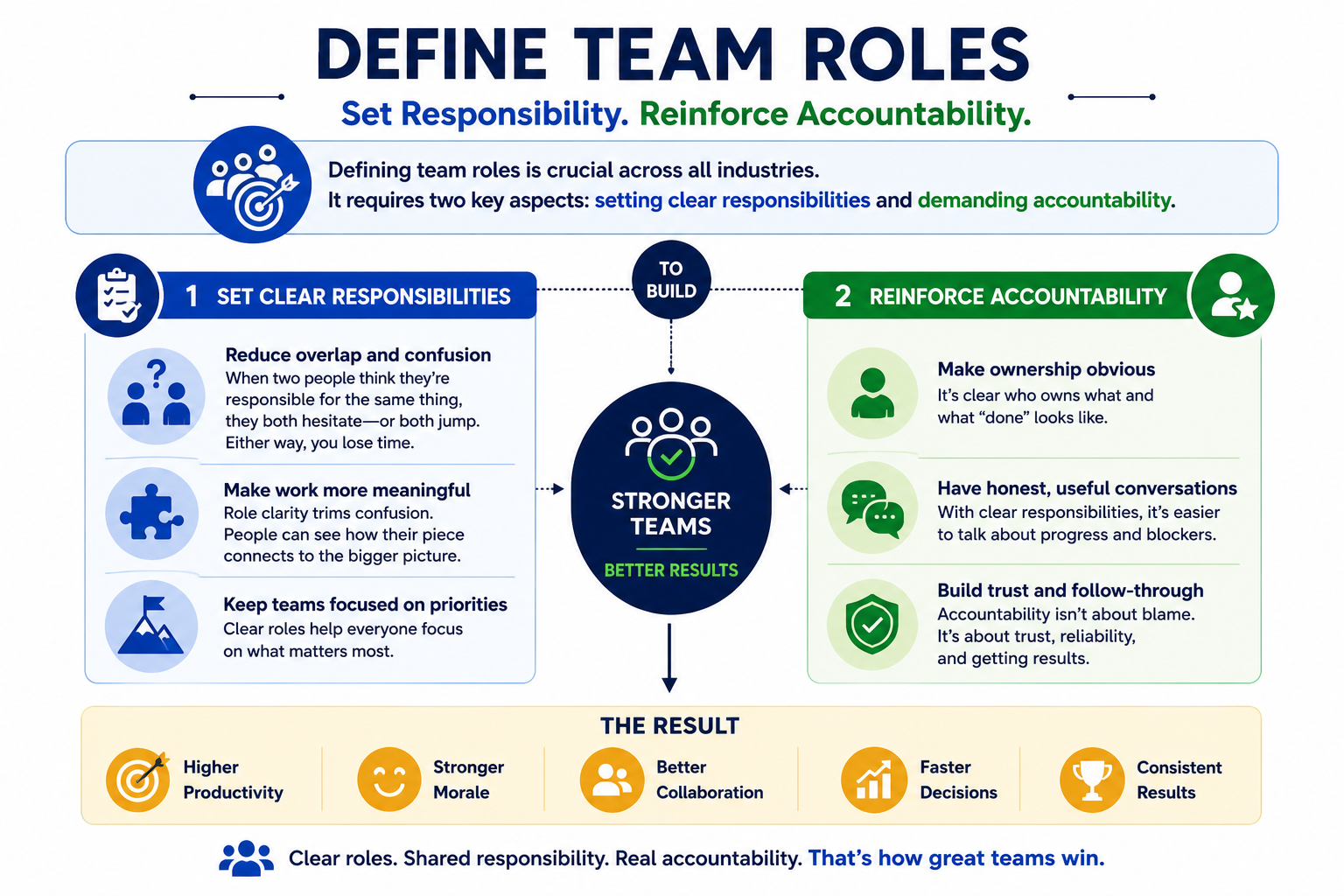
Image source: generated by the author using an AI tool
Clear roles matter in every industry, including telehealth and wellness. Bryan Henry, President of PeterMD, sees role clarity as a simple way to help teams work together and stay accountable.
Henry shares, “When everyone knows what they own, there’s less confusion and more focus. Clear responsibilities help teams work together smoothly. They help members follow through on their commitments and make sure nothing falls through the cracks.”
He concludes, “Accountability becomes much easier when people understand how their role supports the team’s larger goals.”
In finance and trading, where decisions can move quickly and small gaps in ownership can create costly delays, clearly defined responsibilities are especially important.
Gregor Emmian, Deputy Chief Digital Growth Officer at Rise, emphasizes that role clarity gives teams a stronger foundation for decision-making and accountability.
Emmian says, “Clear roles create clarity around who owns a decision…who needs to contribute…who is responsible for seeing it through. In finance and trading, that clarity matters. Why? Because teams often work across functions where timing and accountability are critical.
He adds, “When everyone understands their responsibility, it becomes easier to move with confidence while keeping the broader business objective in view.”
Key Methods for Defining Roles and Building Accountability
How to define team roles
There’s no single right way to map team roles for team effectiveness. The best approach is the one your team will actually use.
The RACI matrix clarifies who is Responsible, Accountable, Consulted, and Informed for each task. It works well for cross-functional projects where communication can sprawl.
Job descriptions and role charters give you a living document for each role. This outlines purpose, key responsibilities, decision rights, and success measures. Nothing fancy. Just enough detail to prevent confusion.
Decision frameworks like RAPID and DACI make it easy to assign decision authority and avoid approval logjams.
Practical ways to assess and define roles:
- List the outcomes your team is responsible for this quarter. Not the tasks, the results. Group related outcomes into logical buckets like customer onboarding or content production. For each outcome, name one accountable owner (the person who makes the call) and the responsible collaborators (the doers).
- Specify which decisions the owner can make independently. Likewise, consider which needs input and which requires approval. Define how you’ll know the work is done well with a short sentence and some metrics. Then walk through real scenarios with the team to catch gaps and bottlenecks before they bite you.
- Match roles to people by looking at skills and energy. Not just titles. A lightweight skills matrix can help: plot core work areas down the left and team members across the top. Then align ownership to where the team has both capability and motivation. People do their best work where they feel confident and curious.
How to build accountability within teams
Clear roles are the foundation. Accountability is the structure you build on top. When everyone understands their lane and the finish line, follow-through becomes a habit. Not a hassle.
Strategic steps for building team accountability:
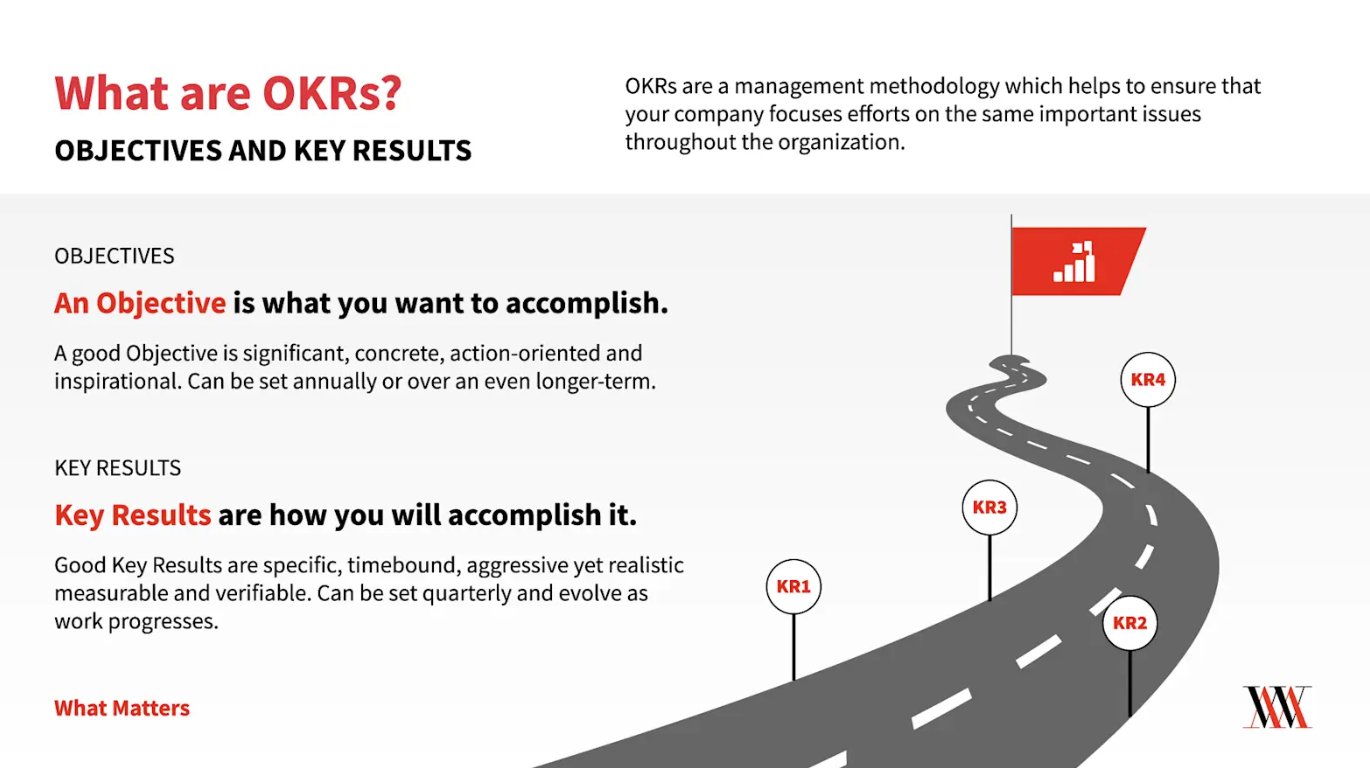
- Put owners and due dates in one visible place. Weekly or biweekly updates with the same three prompts keep momentum without turning into meetings about meetings. Track progress against results (not just activity). Objectives and key results (OKRs) work well here because they connect day-to-day tasks to bigger goals.
- Missed targets should trigger learning (not blame). Run lightweight retros to fix process issues early. Post who can approve what to reduce bottlenecks and endless “just checking” messages.
- Tools can help you track accountability without much overhead. Project management platforms like Asana or Trello make ownership and deadlines clear. Documentation hubs keep role charters and decision logs findable. The tool matters less than consistent use and clear norms.
For example, a team deploying and fixing AI agents might have one person responsible for deployment and another for testing. Or maybe a product lead tracking results.
When something goes wrong, the team knows who leads and what happens next. Ultimately, clear ownership makes it easier to resolve issues quickly and keep projects on track.
Challenges in Establishing Team Roles and Accountability
- Workplace changes can be awkward. People worry role clarity means less autonomy. In practice, it’s the opposite. It sets guardrails so folks can move faster with confidence. That said, involve the team in shaping roles. So, it’s something you build together, not something done to them.
- Cross-functional work creates gray areas. Use a RACI for shared outcomes and agree on response times and escalation paths. As priorities shift, roles drift. Schedule regular reviews to prune responsibilities and keep the map accurate. Accountability fades without a rhythm in group dynamic stages.
- Leaders need to model clarity at all times. They ask for it when it’s missing and remove roadblocks. When leaders share decisions and make ownership visible, everyone follows suit. But remember, they lead support and help, not control and demand.
The same applies to home services, where several team members may be involved in one customer job. Nick Wiese, Regional Vice President at Priority One Heating & Air Conditioning, says clear roles help everyone stay on track.
Wiese shares, “In home services, a job can involve everyone from the person answering the phone to the technician in the field. When each person knows what they own and when to involve others, the work moves faster and customers get a better experience.”
He adds, “Accountability is easier when expectations are clear. Everyone knows what they’re responsible for and how their work affects the rest of the team.”
Case Study: Effective Team Role Definition at Outback Team Building
Clear team roles help people know who is doing what and where they fit. Without that clarity, work can get duplicated, and important tasks can be missed. Even teams can spend too much time figuring out who should take the lead.
Case in point: Outback Team Building saw this firsthand in its work with DemandJump.

DemandJump had three departments: Sales and Marketing, Engineering and Product, Customer Success. Plus remote employees who did not always interact with one another. The company wanted to bring these groups together for a constructive activity, so Outback helped organize a virtually hosted Wild Goose Chase for more than 30 employees.
DemandJump also took a simple approach to getting people involved. Event organizer Dan Mochel intentionally grouped people who did not usually work or interact together. The result? More interaction across departments. Employees became more comfortable talking and collaborating with colleagues they might not normally approach.
The lesson for everyday teamwork is simple: make it clear who owns each outcome, who is responsible for the work, who needs to be involved. That kind of clarity can reduce friction and support better team effectiveness.
Final Note
Effective team roles require two things: defining responsibilities and demanding real accountability.
That said, pick a project. Map a few outcomes. Set one owner per outcome. Agree on your check-in rhythm. You’ll quickly see where to tighten or loosen the process.
Once you get a taste of the clarity, it’s hard to go back. The work gets lighter, and the wins arrive more often.
Looking to hold team-building activities to build relationships and create a stronger team? Outback team building can help you establish a dynamic team with clearly defined and well-executed roles. To get started, request a quote today!
Frequently Asked Questions (FAQs)
1. Why is defining clear team roles so important?
It stops people from stepping on each other’s toes or letting tasks drop. This keeps work moving smoothly and helps everyone feel confident in what they own.
2. What is the best way to assign responsibilities on a project?
Use a simple framework like a RACI matrix or role charter to name one clear owner for each outcome. Then, spell out who needs to do or stay informed on the work.
3. How do you build accountability without making people feel micromanaged?
Start by setting clear finish lines. Likewise, keep due dates visible in a shared project tool. More importantly, focus on outcome-based check-ins and treat missed targets as learning opportunities rather than reasons to assign blame.
Author Bio
Catherine Schwartz is a marketing & e-commerce specialist helping brands grow their revenue and take their businesses to new levels. Her work sits at the intersection of brand, content, and commerce. She translates big-picture strategy into the day-to-day decisions that actually compound: which audiences to reach, what story to tell, and how to make every channel pull its weight. She write about marketing, PR, technology, and team performance.